Should you’ve ever discovered a recipe you actually wish to make, solely to find that the oven temperature is written in Celsius or fuel mark, you’re in the fitting place. Oven temperature conversions are a kind of fundamental kitchen expertise that no person actually teaches you, however when you perceive them, you may cook dinner from recipes written nearly anyplace.
I’ve been cooking and growing recipes professionally for years, and even I don’t wish to cease in the midst of cooking to do math. That’s why I really like having a easy oven temperature conversion chart helpful. Discover the temperature your recipe requires, look throughout the row, and also you’re able to preheat your oven.
You’ll discover that these conversions are good, spherical numbers. Technically, changing Fahrenheit to Celsius with a method will generally offer you a extra exact quantity. Your oven doesn’t want that type of precision. Recipes usually use customary oven settings, so the chart offers you the sensible temperatures you’ll really use when cooking.
Fahrenheit vs. Celsius
In the USA, oven temperatures are nearly all the time written in levels Fahrenheit. Should you see a recipe calling for 350°F, you in all probability don’t even assume twice about it.
However recipes from many different components of the world use Celsius as a substitute. That very same 350°F oven is roughly 180°C.
The essential factor to know is that 350°F and 350°C are very totally different temperatures. Should you’re utilizing a recipe written in Celsius, all the time convert the temperature earlier than turning on the oven.
And sure, I do know that sounds apparent once you’re sitting right here studying it. It feels significantly much less apparent once you’re midway by way of making dinner, your fingers are coated in flour, and also you’re questioning why a recipe needs you to preheat your oven to 180 levels.
What Is a Fuel Mark?
Fuel mark is one other approach of indicating oven temperature, and also you’ll mostly run into it in British and Irish recipes. As an alternative of setting the oven to a selected variety of levels, conventional fuel ovens use numbered settings.
For instance:
- Fuel mark 4 = 350°F = 180°C
- Fuel mark 6 = 400°F = 200°C
- Fuel mark 8 = 450°F = 230°C
In case your oven makes use of Fahrenheit or Celsius, you don’t have to do something particular when a recipe offers you a fuel mark. Simply discover the fuel mark on the chart and use the corresponding temperature on your oven.
Find out how to Convert Fahrenheit to Celsius
Should you don’t have the chart helpful, there may be an precise method:
(°F − 32) × 5 ÷ 9 = °C
So, when you wished to transform 350°F:
(350 − 32) × 5 ÷ 9 = 176.7°C
For cooking functions, you’d use 180°C.
There’s additionally a better trick that works properly once you simply want a fast estimate: subtract 30 from the Fahrenheit temperature and divide by 2.
For 350°F:
350 − 30 = 320
320 ÷ 2 = 160°C
Now, you may see that this shortcut isn’t particularly correct at frequent baking temperatures, which is why I like to recommend utilizing the chart every time you may. Oven conversions are straightforward sufficient that there’s actually no prize for doing them in your head.
Find out how to Convert Celsius to Fahrenheit
To go the opposite route, use:
(°C × 9 ÷ 5) + 32 = °F
For 180°C:
(180 × 9 ÷ 5) + 32 = 356°F
In a recipe, you’ll sometimes use 350°F.
That little distinction between the mathematical conversion and the usual oven setting is totally regular. Recipes are written across the temperature settings obtainable on precise ovens, not round completely transformed numbers.
What About Convection Ovens?
That is the place oven temperature conversions can get a bit complicated as a result of convection is just not one other temperature scale.
A convection oven makes use of a fan to flow into sizzling air across the meals. That transferring air can cook dinner meals extra effectively and sometimes extra shortly than a standard oven.
If a recipe was developed for a standard oven and also you’re utilizing convection, a typical place to begin is to scale back the oven temperature by about 25°F, or roughly 15°C. So a recipe calling for 400°F in a standard oven would usually be baked at about 375°F utilizing convection.
However verify your oven first! Some ovens routinely modify the temperature when you choose convection. If yours does, you don’t wish to scale back the temperature twice.
And once you’re baking one thing the place timing and temperature actually matter, observe the recipe’s directions if it particularly tells you how one can use convection.
Your Oven May Not Truly Be the Temperature It Says
Right here’s one of the crucial helpful issues I can educate you about ovens: the quantity on the show isn’t essentially the temperature inside your oven.
Ovens cycle on and off to keep up temperature, so the precise temperature naturally strikes above and beneath the setting when you cook dinner. On prime of that, some ovens constantly run hotter or cooler than the temperature you choose.
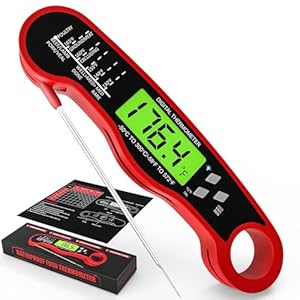
If cookies all the time appear to brown too shortly, muffins routinely take longer than the recipe says, otherwise you’re continuously questioning why your baking occasions appear off, an affordable oven thermometer is a good place to start out.
Set it within the heart of your oven, preheat as typical, and provides the oven sufficient time to totally warmth. Chances are you’ll uncover that your 350°F oven is definitely nearer to 325°F or 375°F.
That’s extremely helpful data to have.
At all times Preheat Your Oven
Preheating actually does matter, particularly once you’re baking.
When a recipe says to bake at 350°F, which means the meals ought to go into an oven that’s already at 350°F. Placing it in whereas the oven continues to be heating modifications how the meals cooks throughout these first a number of minutes.
Your oven might beep to let you know it’s preheated earlier than your complete oven has reached a steady temperature. For recipes the place temperature issues, I like giving the oven a bit further time after that beep earlier than placing the meals in.
The place You Put the Rack Issues Too
Until a recipe tells you in any other case, the middle rack is your greatest default place. It permits sizzling air to flow into across the meals and retains it away from the heating components on the prime and backside of the oven.
Transfer the rack increased once you need extra warmth from the highest, akin to when broiling or browning one thing. Transfer it decrease once you need extra warmth reaching the underside.
Another tip: transfer your oven racks earlier than you preheat. It’s a lot simpler than attempting to rearrange scorching-hot steel racks whereas holding an oven mitt.
Save This Chart for Later
Oven temperatures are one thing you’ll ultimately begin recognizing with out even interested by them. You’ll know that 350°F is round 180°C and fuel mark 4, simply since you’ve seen it sufficient occasions.
Till then, save the oven temperature conversion chart someplace you’ll find it shortly. There’s sufficient to consider once you’re cooking. Changing the oven temperature doesn’t must be certainly one of them.
Trending Merchandise


Auledio Iron 2-Tier Countertop Fruit Greens Basket...
MAYITOP Alternative Canister Vacuum Flooring Brush...

4 Pack Magnetic Spice Storage Rack Organizer for F...